How Does a Jib Crane Work?
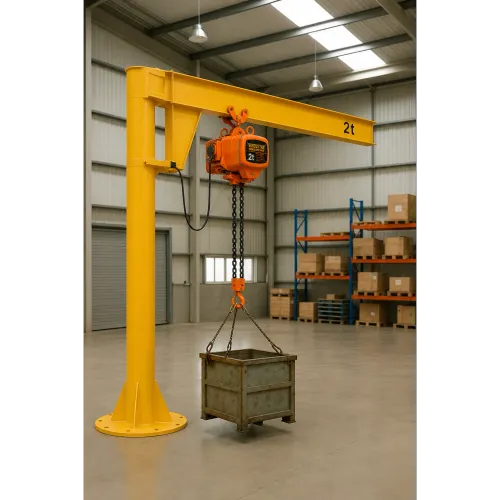
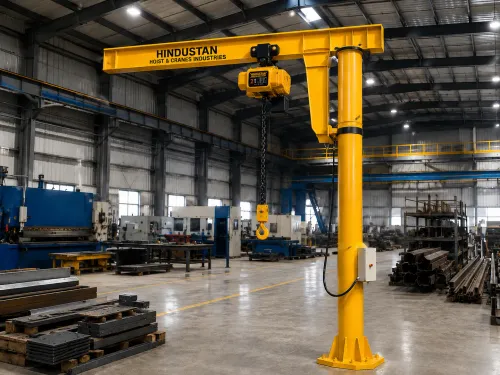
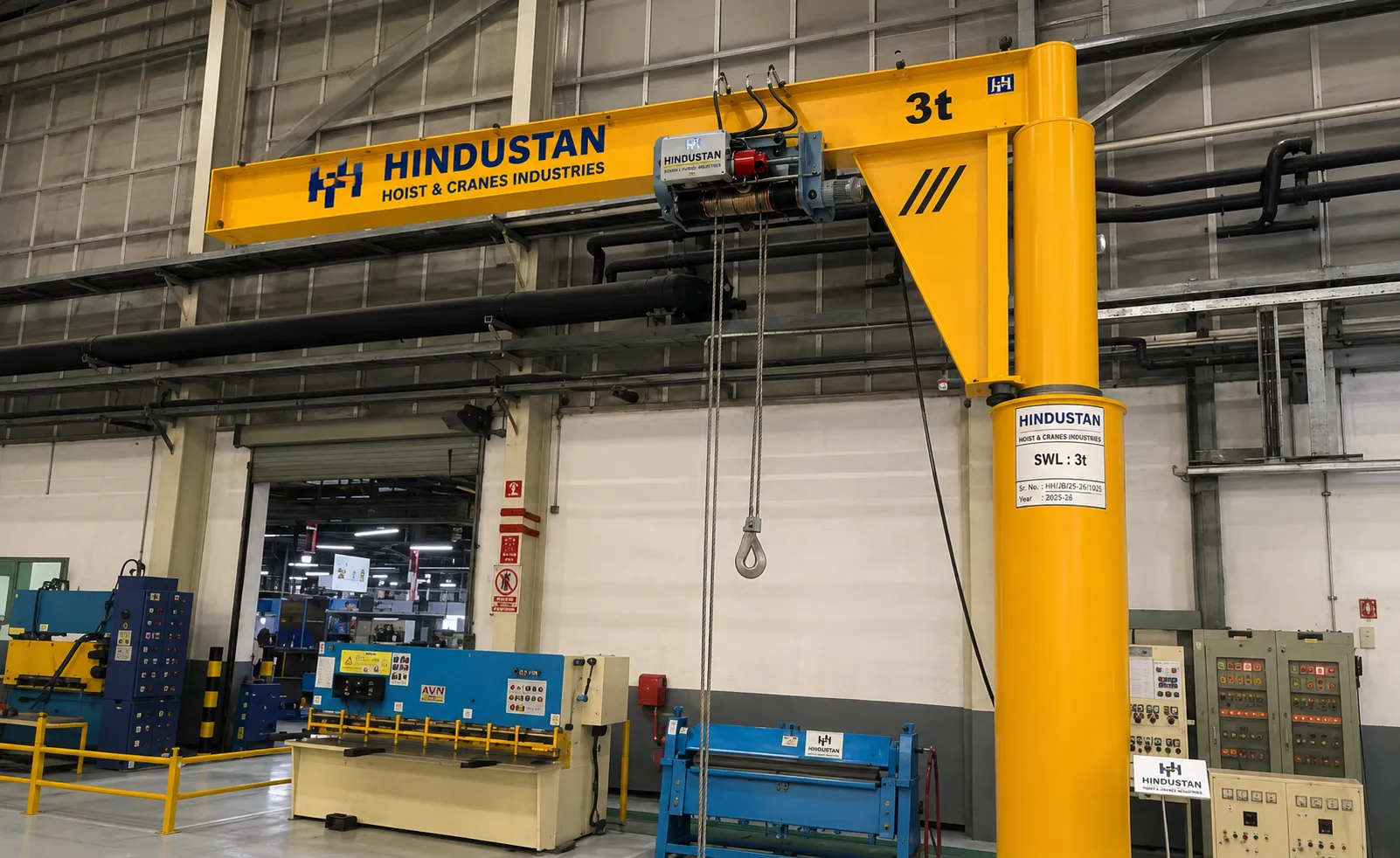
The Hoist Lifts and lowers the load, while the trolley can move the hoist along the jib arm on applicable designs. The jib itself rotates around its mounting point, allowing the load to be moved within the crane's operating radius.
The combination of lifting, trolley movement, and jib rotation enables controlled handling of materials around a workstation.
How to Select the Right Jib Crane?
Before selecting a jib crane, consider:
Lifting capacity – Identify the maximum load to be handled.
Working radius – Determine how far the load needs to travel from the mounting point.
Lifting height – Establish the required hook height.
Jib rotation – Determine the required angle of rotation.
Mounting arrangement – Select floor, pillar, wall, or another suitable configuration.
Duty cycle – Consider the frequency of lifting operations.
Operating environment – Assess indoor, outdoor, dusty, corrosive, or other conditions.
Control system – Select the appropriate pendant, remote, or other control method.
The Hoist Lifts and lowers the load, while the trolley can move the hoist along the jib arm on applicable designs. The jib itself rotates around its mounting point, allowing the load to be moved within the crane's operating radius.
The combination of lifting, trolley movement, and jib rotation enables controlled handling of materials around a workstation.
How to Select the Right Jib Crane?
Before selecting a jib crane, consider:
Lifting capacity – Identify the maximum load to be handled.
Working radius – Determine how far the load needs to travel from the mounting point.
Lifting height – Establish the required hook height.
Jib rotation – Determine the required angle of rotation.
Mounting arrangement – Select floor, pillar, wall, or another suitable configuration.
Duty cycle – Consider the frequency of lifting operations.
Operating environment – Assess indoor, outdoor, dusty, corrosive, or other conditions.
Control system – Select the appropriate pendant, remote, or other control method.
Keywords